
Identify the failed component
The main decision is how many components have failed and whether the retained assembly can provide a worthwhile result. Write down the result you want before comparing individual products or repair methods.
A practical route may be choosing repair for a defined defect and replacement when glass, hardware, frame and perimeter problems overlap. That approach only makes sense when it fits the way the opening, room or property will actually be used.
Separate a focused repair from replacement
The choice must also account for age, parts availability, water damage, energy goals, appearance and plans for other windows on the elevation. These conditions can change which option is comfortable, durable and straightforward to maintain.
The important limitation is that a cheaper repair is not economical when it leaves the main cause or another near-term failure untouched. A useful comparison should state that constraint clearly instead of presenting one option as universally better.
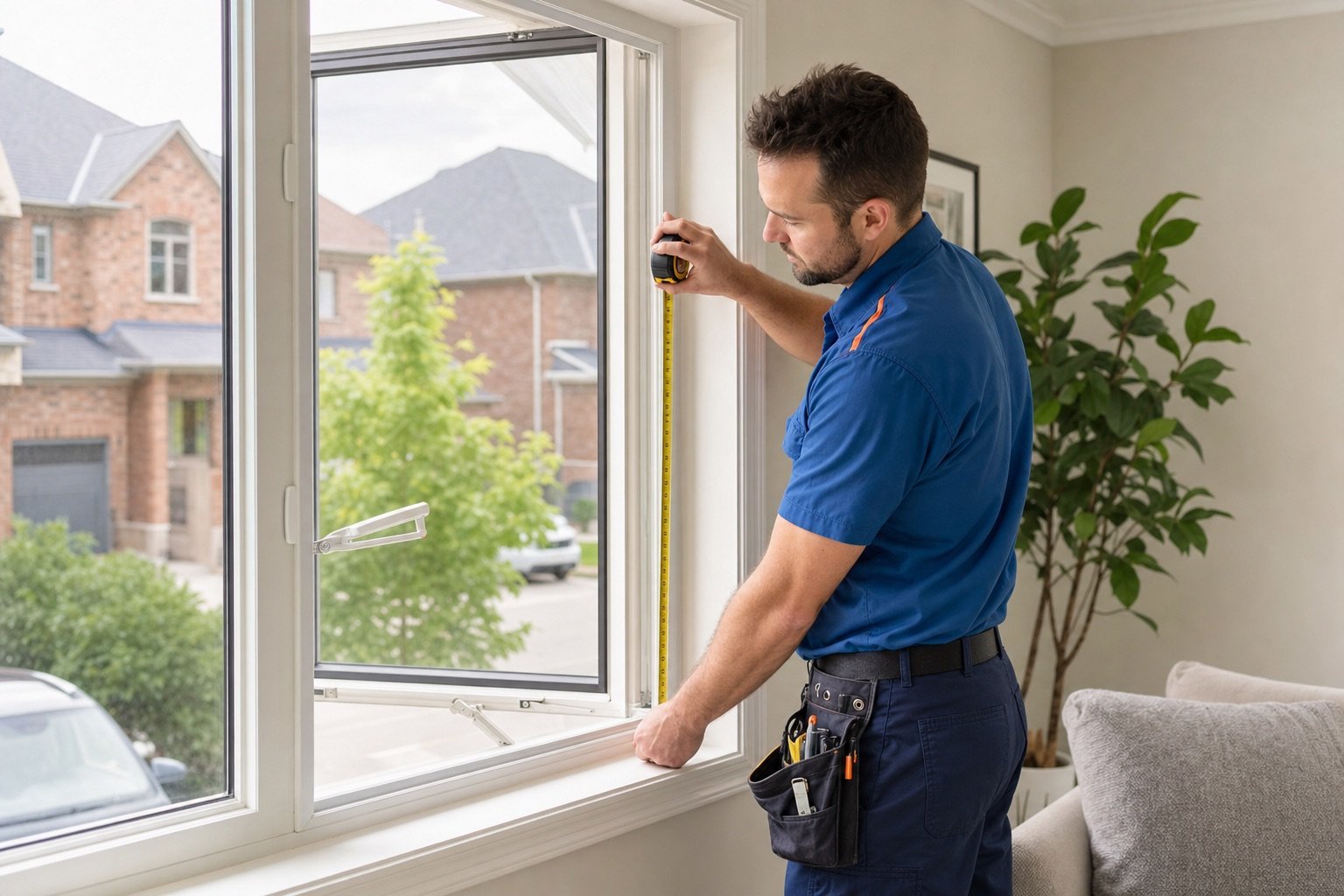
Document the symptom clearly
For an initial review, provide full-opening photographs, known history and a list of every symptom rather than only the most visible one. Approximate dimensions can help with early planning, but final fabrication or ordering measurements must be verified for the accepted scope.
Brampton Windows can review the evidence, identify the likely service category and confirm what requires an on-site diagnosis.
Questions to answer before deciding
- What result should this opening or project deliver when the work is complete?
- Which problem, limitation or maintenance concern exists now?
- What surrounding conditions could affect the choice or installation?
- Which photographs, measurements or records can you provide for the first review?